What's the Affordable Housing Fight Actually About?
housing ongoing
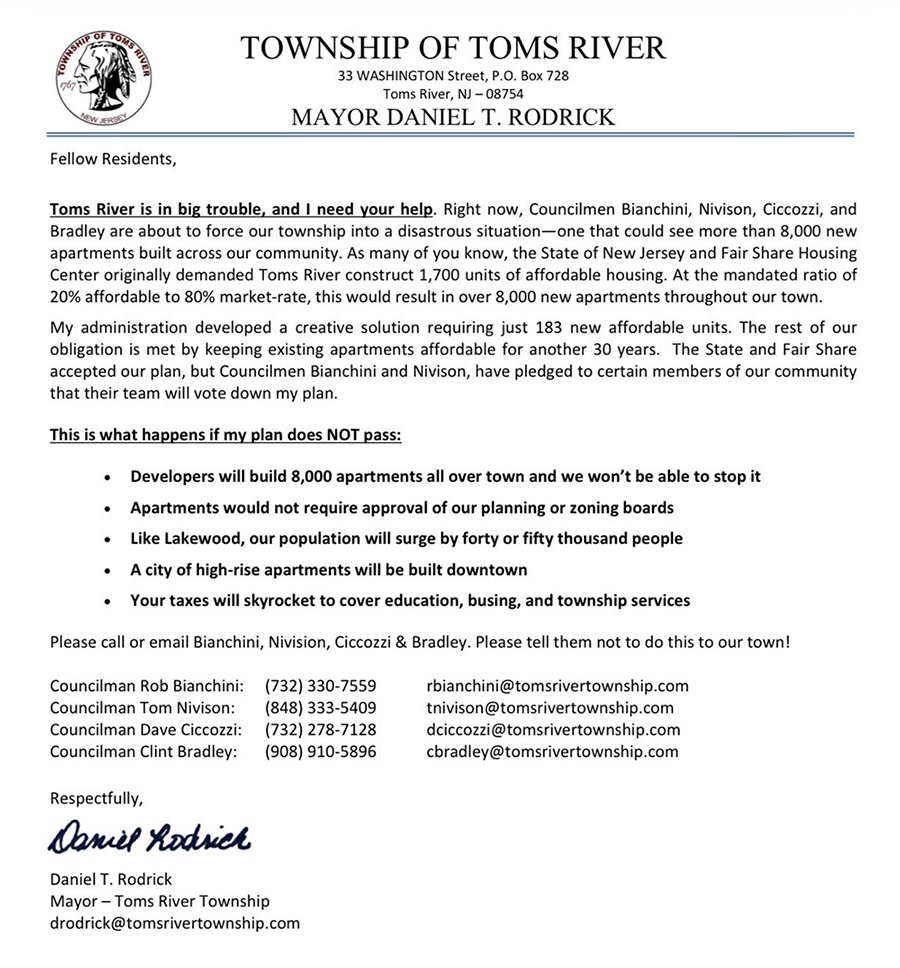
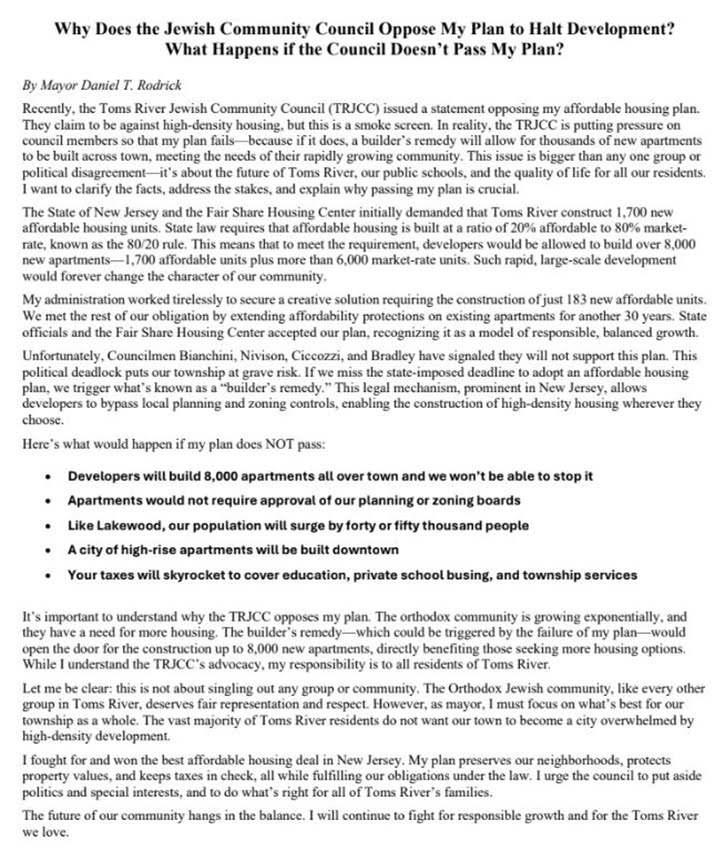
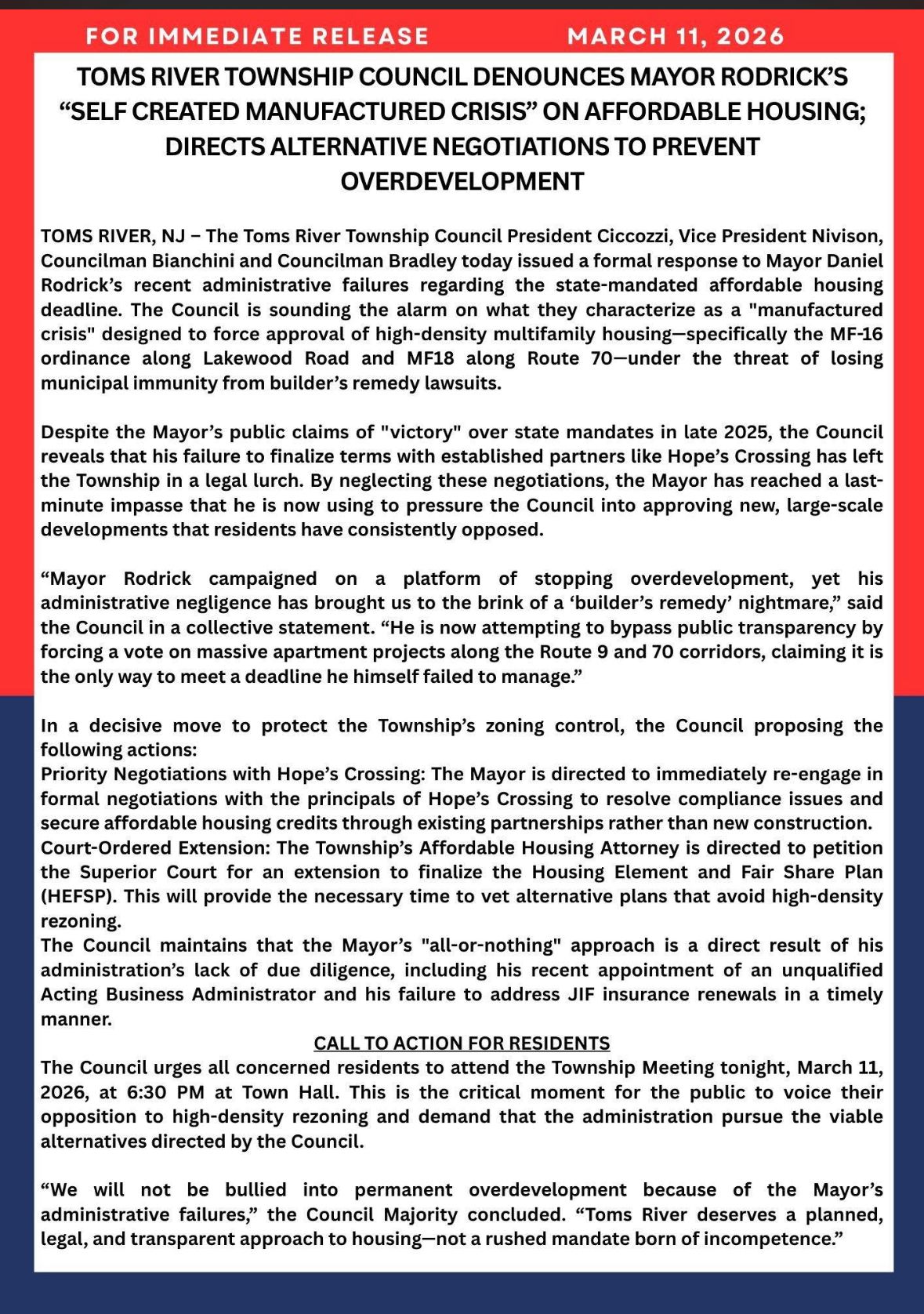
The Toms River Township Council and Mayor Daniel Rodrick are fighting over how to meet state affordable housing requirements, with each side blaming the other for creating a crisis.
What happened
New Jersey requires Toms River to provide opportunities for 526 rehabilitation units and 649 new affordable housing units by March 15, 2026. In December 2025, the township signed a settlement with Fair Share Housing Center agreeing to meet this requirement through deed restriction extensions at existing complexes and new zoning for apartment buildings. The mayor wants the council to approve implementing ordinances before the March 15 deadline. Some council members want to delay and renegotiate the plan.
Why it matters
If Toms River misses the March 15 deadline without an approved compliance plan, the township loses legal protection from “builder’s remedy” lawsuits. Under New Jersey’s Mount Laurel doctrine, developers can then ask courts to override local zoning and build high-density housing anywhere in town. Both sides agree this outcome would be worse than the current dispute, but they disagree on how to avoid it.
The current settlement would create new zoning allowing apartments in four areas: a small mixed-use project on Route 37 (20 units), expansion at existing Jamestowne Village apartments (~100 units), a small redevelopment increase in the Hooper-Caudina area, and a larger MF-18 multifamily zone near Route 70 and Massachusetts Avenue. The Route 70 area is the main source of controversy.
The Route 70 dispute
The proposed MF-18 zone would allow 18 apartments per acre with a 20% affordable housing requirement. Township documents indicate this zone is designed to generate 134 affordable units, which implies roughly 670 total apartments to meet the compliance requirement. However, if all land in the overlay were eventually developed at maximum density, the total could reach approximately 1,400 units.
Council members argue the mayor failed to complete negotiations with partners like Hope’s Crossing before the deadline and is now using the crisis to push through large developments residents oppose. They want to seek a court extension and renegotiate using existing affordable housing sites instead of new apartment zoning.
Mayor Rodrick counters that his administration negotiated the township’s obligation down from an initial estimate of about 1,700 affordable units. He says the settlement protects local zoning control, while rejecting it could lead to uncontrolled apartment construction anywhere developers choose through builder’s remedy lawsuits.
What happens next
The township council must decide whether to adopt the implementing ordinances before March 15, 2026. Superior Court Judge Sean Gertner already ruled on the township’s housing obligation numbers in May 2025 and would need to approve any significant changes to the December settlement. If the ordinances are not adopted by the deadline, developers could file builder’s remedy lawsuits asking courts to approve apartment projects that bypass current zoning restrictions.